INDENT ERRORS
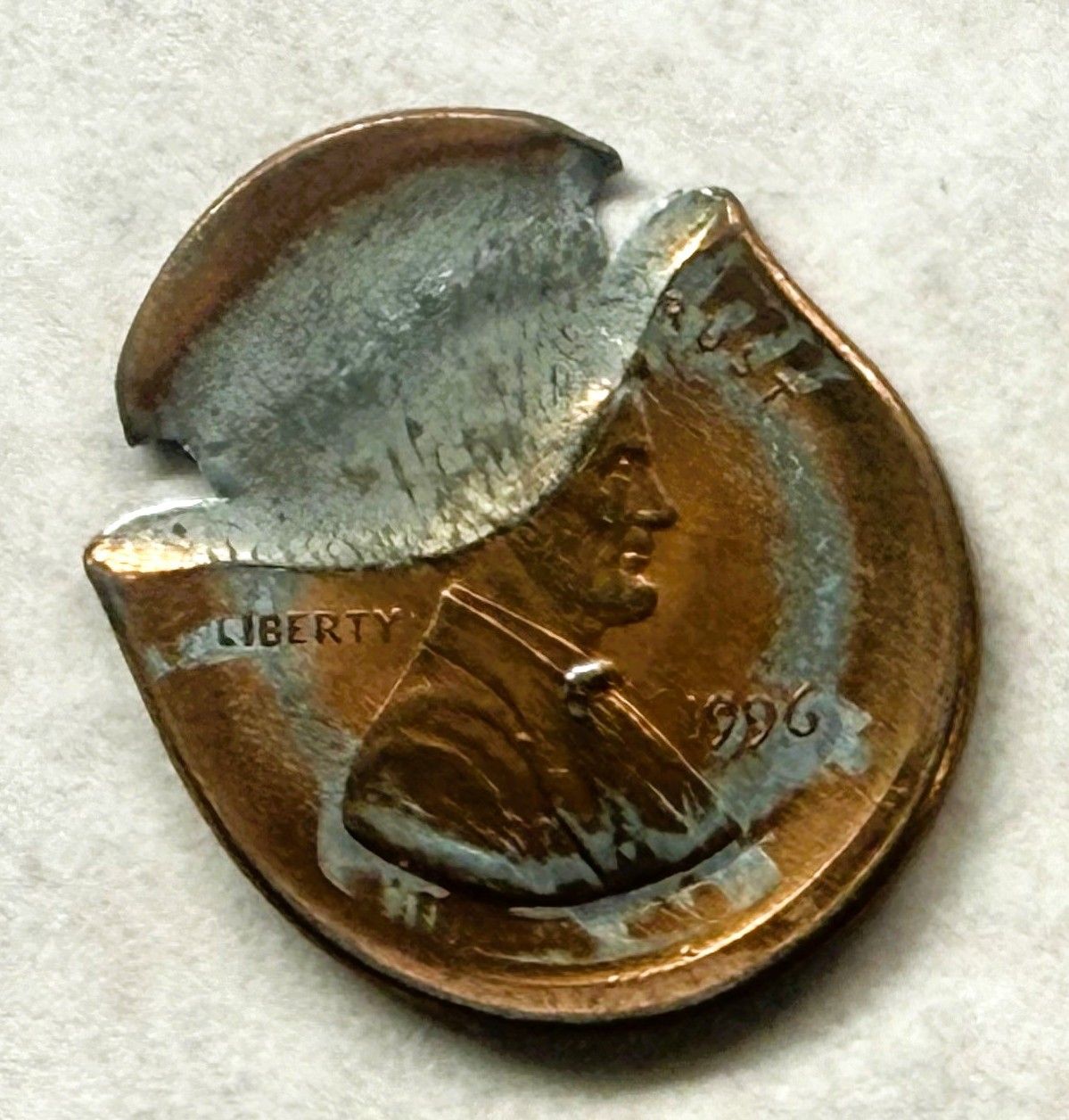
Understanding Indent Error Coins
Indent errors occur when a planchet is struck while another planchet (or a fragment of one) is accidentally resting on top of it. Instead of receiving a full, clean strike, the lower planchet is partially blocked, leaving a deep, curved depression in the coin. These errors are dramatic, mechanically interesting, and highly collectible.
Indent errors clearly show what happens when two planchets collide inside the striking chamber.
🔍 What Is an Indent Error?
An indent occurs when:
- A planchet enters the striking chamber normally
- A second planchet (or partial planchet) accidentally overlaps it
- The dies strike both pieces at the same time
- The upper planchet shields part of the lower one
- The lower coin shows a sunken, unstruck area shaped like the overlapping planchet
The result is a coin with a deep, curved, blank depression.
🟦 Key Diagnostic Features of a Genuine Indent
1. Deep, Curved Depression
The indent area is smooth, blank, and concave — matching the shape of the overlapping planchet.
2. Sharp, Natural Edge
The border of the indent is crisp and rounded, not cut or filed.
3. Opposite Side Weakness
The reverse side (opposite the indent) shows:
- Weak strike
- Flattened design
- Loss of detail
This is one of the strongest indicators of authenticity.
4. Correct Shape
A full planchet creates a round indent. A clipped planchet creates a curved, clipped‑shaped indent.
5. No Raised Metal
Indent errors are sunken, not raised. Raised areas indicate die breaks or struck‑through debris.
🟩 Types of Indent Errors
1. Full Planchet Indent
A complete planchet overlaps the struck coin.
Characteristics:
- Large, round depression
- Very dramatic
- Opposite side shows major weakness
These are the most desirable.
2. Partial Planchet Indent
Only part of a planchet overlaps the struck coin.
Characteristics:
- Crescent‑shaped or irregular depression
- Opposite side shows partial weakness
These are more common but still collectible.
3. Fragment Indent
A small piece of a broken planchet or scrap metal causes the indent.
Characteristics:
- Small, irregular depression
- Opposite side shows localized weakness
These are less dramatic but still legitimate errors.
🟧 Indent vs. Struck‑Through Error
These two errors are often confused.
| Feature | Indent | Struck‑Through |
|---|---|---|
| Object type | Planchet or metal piece | Debris, cloth, wire, grease |
| Depth | Deep, concave | Shallow or textured |
| Opposite side | Strong weakness | Sometimes none |
| Shape | Round or curved | Irregular |
| Value | Higher | Varies |
If the depression is deep and perfectly curved, it’s almost always an indent.
🟨 Indent vs. Off‑Center Strike
These errors look nothing alike, but beginners sometimes confuse them.
| Feature | Indent | Off‑Center |
|---|---|---|
| Depression | Yes | No |
| Blank crescent | No | Yes |
| Opposite side weakness | Strong | Minimal |
| Design shift | None | Yes |
| Value | Moderate–High | Depends on % off‑center |
📈 How Much Are Indent Errors Worth?
Value depends on:
- Size of the indent
- Whether it’s a full or partial planchet
- Denomination
- Eye appeal
- Opposite‑side weakness
General Price Ranges
| Denomination | Small Indent | Medium Indent | Full Planchet Indent |
|---|---|---|---|
| Cent | $15–$40 | $40–$100 | $100–$250+ |
| Nickel | $20–$50 | $50–$120 | $120–$300+ |
| Dime | $25–$60 | $60–$150 | $150–$350+ |
| Quarter | $30–$80 | $80–$200 | $200–$450+ |
| Half Dollar | $40–$120 | $120–$300 | $300–$700+ |
Full planchet indents are the most dramatic and valuable.
🧭 Why Collectors Enjoy Indent Errors
Indent errors offer:
- Clear mechanical explanation
- Strong visual appeal
- A direct look at minting mistakes
- A wide range of shapes and sizes
- Good value for collectors at all levels
They are one of the most “honest” errors — the minting process itself created the mistake.
🏁 Final Thoughts
Indent errors are a fascinating result of two planchets colliding inside the striking chamber. Their deep, curved depressions and opposite‑side weakness make them easy to identify and highly collectible. Understanding the diagnostics — especially the concave shape and reverse weakness — will help you confidently recognize genuine indent errors and appreciate their place in the world of mint mistake