BEGINNER'S GUIDE TO MINT ERROR COINS
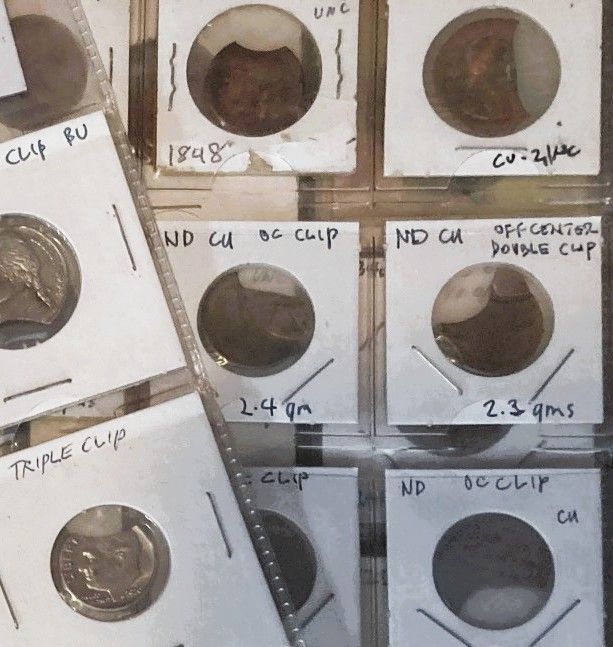
Mint Error Coins
Mint error coins are some of the most fascinating pieces in numismatics. They show what happens when the minting process goes wrong — sometimes slightly, sometimes dramatically. For new collectors, understanding the basics of how coins are made (and how they can go wrong) is the key to recognizing genuine errors and avoiding damaged or altered coins.This guide introduces the most important concepts every beginner should know.
🟦 How Coins Are Normally Made
Before understanding errors, it helps to know the standard minting process:
- Blanking – A sheet of metal is punched into round discs called blanks.
- Annealing – Blanks are softened with heat.
- Upsetting – Blanks are given raised rims and become planchets.
- Striking – Planchets are struck between two dies inside a collar.
- Ejection – The finished coin is pushed out of the press.
Any mistake in these steps can create a mint error.
🟩 What Counts as a True Mint Error?
A coin is considered a true mint error only if:
- The mistake happened inside the mint,
- The coin was struck with faulty equipment,
- The error is unintentional,
- The coin was not altered after leaving the mint.
Damage that happens after the coin enters circulation is not a mint error.
🟧 Common Types of Mint Errors (Beginner‑Friendly)
1. Off‑Center Strikes
The planchet is not centered between the dies, causing part of the design to be missing and a blank crescent to appear.
Beginner tip: If the date is visible, the value is usually higher.
2. Broadstrikes
The collar fails, allowing the planchet to expand outward. The design stays centered, but the coin becomes wider and rimless.
Beginner tip: If the design is centered and the rim is missing, it’s likely a broadstrike.
3. Double Strikes
The coin is struck more than once. The second strike may be in‑collar, out‑of‑collar, or even flipped over.
Beginner tip: Look for two impressions of the same design.
4. Cuds
A piece of the die breaks off at the rim, leaving a raised, blob‑like area on the coin.
Beginner tip: A cud must touch the rim.
5. Clipped Planchets
A blanking punch overlaps a previous hole, creating a curved “clip” on the edge.
Beginner tip: Look for the “Blakesley Effect” — a weak rim opposite the clip.
6. Struck‑Through Errors
Something (grease, cloth, wire, debris) gets between the die and planchet during striking.
Beginner tip: Struck‑through errors usually have depressed areas, not raised ones.
🟨 What Is Not a Mint Error?
Beginners often confuse damage with errors. These are not mint errors:
- Scratches
- Dents
- Plier marks
- Environmental corrosion
- Post‑mint cuts
- Hammered coins
- Vice jobs
- Coins bent or flattened by machines
If the damage happened after the coin left the mint, it is not an error.
🟫 How to Tell if an Error Is Genuine
Here are the most important diagnostics:
✔ Metal flow looks natural
✔ No tool marks or grinding
✔ Weight matches the correct planchet
✔ Error type matches known minting mechanics
✔ Opposite side shows expected weakness or distortion
✔ Error is consistent with other known examples
If something looks “too weird” or mechanically impossible, it may be altered.
🟪 What Makes an Error Valuable?
Value depends on:
- Type of error
- Severity
- Eye appeal
- Denomination
- Date visibility
- Rarity
- Demand
Dramatic errors (big off‑centers, large cuds, flip‑over double strikes) bring the strongest premiums.
🟫 Tips for New Collectors
✔ Start with dramatic, easy‑to‑identify errors
✔ Avoid coins with suspicious grinding or cutting
✔ Compare your coin to known examples
✔ Learn the minting process — it explains everything
✔ Buy from reputable sellers
✔ Don’t rush — study before spending big money
Mint errors are a rewarding part of the hobby, and the more you learn, the easier it becomes to spot genuine pieces.
🏁 Final Thoughts
Mint error collecting is one of the most exciting areas of numismatics. Each error tells a story about what went wrong inside the mint, and no two pieces are exactly alike. With a basic understanding of the minting process and the major error types, beginners can confidently explore this fascinating field and build a collection that reflects both curiosity and craftsmanship.